1598 stories
·
0 followers

One with the world? A new look at brains transformed by psychedelics.

1 Share

For about a decade, the mainstream understanding has been that psychedelics cause chaos in the brain. Brain networks—the stable patterns of communication that handle vision, attention, or our sense of self, and more—loosen and start talking to each other all at once. EEG traces get noisier and more complex. “Think of the networks of the brain as highways,” says Devon Stoliker, a neuroscientist at Monash University. “Under psychedelics, these highways break down into many different directions.”

In a recent Nature study, Stoliker’s team designed an experiment to test whether these directions are truly chaotic and random. Researchers gathered 62 people who had never taken a psychedelic before, gave them 19 milligrams of psilocybin, a common psychedelic found in certain fungi, and scanned their brains. Then, they used AI to analyze the drugged and sober brain scans. What emerged was not exactly chaos.

An uninterrupted trip

Stoliker thinks chaos is not a satisfactory explanation for psychedelics’ effect on the brain. “It never really explained why an individual would have a meaningful experience, why they might have insight, why they might experience clarity, and why these might translate into positive psychological changes,” Stoliker says. To investigate if there are other explanations, he and his colleagues designed a study called PsiConnect.

Volunteers went through the same four-part sequence twice, once sober and once on psilocybin. The sequence included putting participants in four different settings or contexts: eight minutes of lying at rest, a guided meditation, an 11-minute curated music playlist, and finally six minutes of eyes-open video of clouds moving across a sky. Each participant did all four inside an MRI scanner about 80 minutes after dosing, and again on EEG about 150 minutes after.

There were no cognitive tasks researchers routinely go for in brain studies, but there was a purpose behind this omission.

“We wanted ecological validity,” Stoliker says. “We wanted to know what the brain was like when somebody was having an authentic, uninterrupted psychedelic experience. If somebody took a psychedelic in a therapeutic setting, you wouldn't have them completing tasks.” Stoliker also points out that there's evidence that giving someone a task mid-trip pulls them out of the state—a phenomenon researchers sometimes call grounding. “Once you introduce these sorts of tasks, you're actually interrupting the very phenomena you are seeking to measure.” And it worked.

Half of the participants ranked their session among the most meaningful experiences of their lives, and 24 put it in their personal top five. Stolkier and his colleagues started analyzing their brain scan data to find out why.

Blurred boundaries

Measuring global functional connectivity—how much influence each patch of cortex exerts over the rest—the team found that, when participants had their eyes closed, sensory regions lost sway while associative regions gained. “It seems like the brain's ability to construct reality, or imagination, or our associations, our beliefs, our sense of self—these faculties had more dominance over sensory areas,” Stoliker says, stressing that the interpretation is a hypothetical. “This could help explain why people have meaningful, complex imagery experiences, why they have mystical experiences with imagery that is personally relevant to them.”

Another observation the team made was that connections within each brain network weakened, connections between networks strengthened. The brain's modularity, a parameter that describes how cleanly neurons stay sorted into specialist teams, dropped across all four parts of the experimental sequence.

What’s more, researchers found that, when sober, activity in a brain with its eyes shut looked very different from a brain watching a movie. Under psilocybin, that difference nearly evaporated. In the visual network, the gap between eyes-open and eyes-closed connectivity shrank by 85 percent. The results from the EEG session independently confirmed that, with alpha-band activity (normally a marker of the brain gating visual input) reduced by nearly half.

“When somebody takes a psychedelic and they're able to close their eyes and see complex imagery, there seems to be less boundary between the internal and external world than we ordinarily experience,” Stoliker says.

Regardless of these details, the results rather accurately reproduced the chaos in the brain so many researchers claimed psychedelics caused. This chaos, though, turned into order when the team processed their data in a slightly unorthodox way.

Hidden order

Scientists usually do two acts of averaging in a standard brain imaging study. The first is averaging over time. An eight-minute brain scan comprises a few hundred successive images of the whole brain. To understand how two specific regions work together, researchers conventionally average all these images down to a single number describing how well the two regions' activity matched up across the whole eight minutes.

The problem with this analysis is that it runs the risk of missing ordered structures that appear for a brief period and then disappear into chaos.

The second analysis is averaging over people. Having produced one such number per participant, the standard approach then pools all of them into a group average, on the assumption that individual differences are noise that will be canceled out. Stoliker’s study was focused on individual experiences, so he wanted to avoid that.

Instead, the team fed the moment-by-moment activity of 332 brain regions into CEBRA, a machine-learning tool that compressed the data down to its essential structure while preserving the order of events. For each individual, it produced a trajectory—a path traced through a three-dimensional space, one point for each moment of the scan.

“When they're not under psilocybin, the brain activity is less differentiated by context,” Stoliker says. "But under psilocybin, we see that the activity becomes organized across time and more clearly differentiated by context.” The trajectories separated into four distinct clusters corresponding to rest, meditation, music, and the movie. A classifier could read a moment of brain activity and say which one the person was in.

It turned out the performance of that classifier scaled with how profound the participants described their experience as being.

One with the world

To find out which parts of the brain were doing the work, the team replaced one network's psilocybin activity with its sober version and checked how badly the classifier degraded. The default mode network and the visual network each accounted for over 20 percent of the effect. “The default mode network is strongly associated with the sense of self: daydreaming, mind wandering, thinking about yourself. It's often been called the narrative self,” Stoliker explains. “On the other end of this gradient, more externally oriented, is the visual system.”

Under psilocybin, the two became less differentiated, which the team thinks explains why participants reported a subjective experience of the self and the external world becoming less separate, a state Stoliker calls “embeddedness.”

“Theoretically, we could suggest that psychedelics are temporarily altering the organization of brain networks that ordinarily help maintain this separation that we experience,” he says. "It really challenges the idea of whether the internal world and external world are separate and highlights the idea that the brain may be responsible for constructing both.”

Tuning the room

The day after the session, participants rated whether various things had shifted, like sense of connection to themselves, to others, to nature, along with peace, acceptance, and creativity, all on a scale running from –100 to 100. “For the vast majority of our participants, we found they had positive psychological changes the next day,” Stoliker says. The data from the brain reading classifier the team used for discriminating among meditation, rest, the movie, and the music tracked with the size of that shift.

In the future, Stolkier hopes to use this for therapeutic purposes. If context isn't just mood-setting but is mechanically shaping brain organization, Stolkier argues, then the room, the playlist, and the instructions start to look like clinical variables a clinician could deliberately tune to improve therapeutic outcomes. But there are details the team must work out first.

As of now, the researchers admit that when two people report identical “embeddedness” scores, they can potentially have very different subjective experiences. Also, all the volunteers in Stoliker’s study were healthy individuals, not patients suffering from psychological or psychiatric disorders that potential therapies using psychedelics could be aimed at.

Finally, we still don’t know how exactly variables like music or visuals should be tuned. “That's a future avenue where we need more research to determine exactly what conditions should be optimized, and for who. It's quite possible we would want to take different approaches for each individual, or depending on what their diagnosis is,” Stoliker says. “Still, finding this level of organization hidden underneath that disorder and chaos has some really good explanatory value.”

Nature, 2026. DOI: 10.1038/s41586-026-10910-z
Read full article

Comments


Read the whole story
Share this story
Delete

Driver wins $76 after ALPR led to bogus traffic stop, drug searches

1 Share

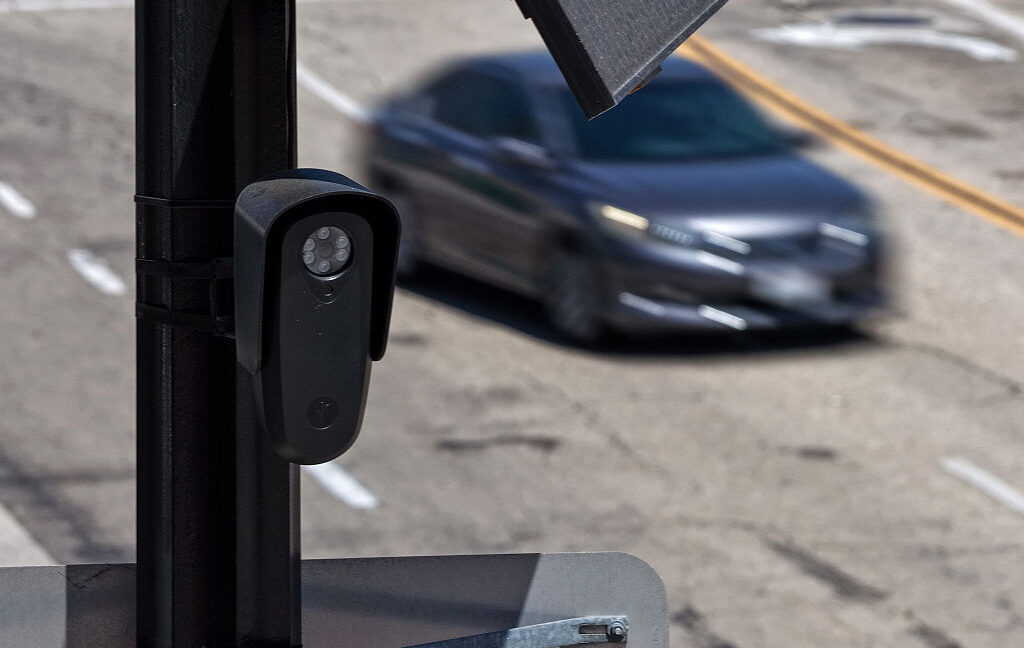
A federal jury in Texas recently ruled in favor of a man who sued Bexar County and its sheriff over allegations that the agency ran what the plaintiff’s attorneys called an “unconstitutional traffic stop scheme” enabled by “AI-powered” license plate readers.

Late last month, plaintiff Alek Schott of Houston was awarded $76, one dollar for each minute that he was detained. (Schott asked for this exact amount as symbolic compensation.)

“After the stop, I filed a complaint with the Sheriff’s Office because I knew what happened to me was wrong,” Schott said in a statement after his win. “The department reviewed it, told me they didn’t see any violation, and said if I had a problem with it, I should sue them. So I did.”

Suspicion

In his civil complaint, Schott outlined a wild tale.

Schott had been driving his pickup truck home from a work trip to Carrizo Springs, in the southwestern part of the state, in March 2022. While in Bexar County, which covers the area around San Antonio, a police officer pulled Schott over for “lane drifting."

The father of two was questioned by deputy Joel Babb, who admitted later that the stated reason for the traffic stop was bogus.

The real reason for the stop was that Babb had received a tip via a law enforcement WhatsApp group. It came from someone named “Kiki,” who allegedly worked with a federal fusion center in Laredo. Kiki apparently had near real-time access to automated license plate reader data.

According to Babb’s deposition, Kiki told him that Schott's truck had made a potentially suspicious “one-day turnaround.” That is, Schott drove all the way from Houston, stopped in Carrizo Springs for one night, and then returned home to Houston the next day. (Schott sells oilfield supplies.) To authorities, this was apparently enough to make one look like a smuggling suspect.

After seeing the WhatsApp message, Babb waited for Schott's vehicle and pulled it over once it passed his location. During the traffic stop, Babb said that he was on the “Criminal Interdiction Unit” looking for “human smuggling, drug smuggling, and all those things like that.”

According to the Institute for Justice, which helped Schott with his lawsuit, the entire stop was a travesty. "Footage from Alek’s own dashcam shows he never drifted lanes," the group said. "Bodycam footage from the deputy shows Alek gave the officer calm, mundane answers about a run-of-the-mill work trip. Nothing about what he said was suspicious, but the deputy called a drug dog anyway. And moments before the dog alerted by jumping on the truck, the handler’s bodycam shows that he signaled the dog."

Schott was detained for 76 minutes while his truck was thoroughly searched. Cops found nothing, despite the drug dog's alert.

Schott eventually sued Bexar County. In late September, he won—the jury gave him the token $76 he requested.

"Money was never what mattered," his lawyers said. "This was and has always been about the Constitution. IJ will now ask the court to enjoin Bexar County from using baseless traffic stops as a tool for warrantless searches, and will work to enforce the precedent across the state."

“This is what mass surveillance looks like when it reaches the shoulder of the highway,” Josh Windham, one of Schott’s attorneys, said in a statement. “An AI-powered camera flagged Alek’s plate. An anonymous law enforcement agent decided his completely ordinary trip looked suspicious. And a deputy went out and found a violation that never happened.”

The Bexar County Sheriff’s Office, which touts its use of Flock Safety cameras, declined Ars’ request for comment.

Who watches the watchers?

Longtime critics of license plate readers generally, and Flock in particular, told Ars that scrutiny of this technology is increasing.

“I think this case seems like a pretty quintessential example of what we're seeing more and more as the public digs into ALPR surveillance: AI tech that vendors sell with pie-in-the-sky promises to improve public safety often face a tough reality check,” Jake Laperruque, deputy director of the Center of Democracy and Technology’s Security and Surveillance Project, wrote in an email to Ars.

“The truth is that ALPRs create serious dangers for Americans' civil liberties, and if there aren't sensible guardrails and checks on how these powerful tools are used, they also create serious risks to public safety with drivers being improperly pulled over or stalked by officers abusing the tech.”

Read full article

Comments


Read the whole story
Share this story
Delete

Why does the compiler sometimes use ud2 and sometimes int 3 for code that shouldn’t execute?

2 Shares

There are two common ways for x86 compilers to indicate that execution should not have reached a particular point: One is the single-byte int 3 breakpoint opcode. And the other is the two-byte ud2 invalid instruction opcode. How do they decide which one to use?

The two types of “bad instructions” are typically for different purposes.

The int 3 means “There is no code here. If you somehow got here, then somebody used an invalid function pointer.” It is used as padding, such as between functions. There is no way that code can reach the int 3 by normal execution. You must have generated an invalid address and called it.

The ud2 is used to mark the case when execution reached something that should be unreachable. It means “You executed a code path that the standard says is undefined behavior.” For example, falling off the end of a non-void function without returning a value, or following the call to a [[noreturn]] function in case it somehow managed to return.

Using int 3 for “there is not even code here” is important because it’s a one-byte instruction. If you had used the two-byte instruction ud2 instruction, then that stray function pointer might land on the second byte of the instruction, in which case it’s not ud2 any more. Instead of stopping immediately, it starts executing garbage code:

0b 0f            or      ecx,dword ptr [edi]

Okay, so what does this mean for you?

If you find yourself executing the ud2 instruction, then look for logic flaws in your code. If you find yourself executing the int 3 instruction, then look for an uninitialized function pointer variable, or a hard-coded breakpoint, or a debugger-inserted breakpoint.

The post Why does the compiler sometimes use <CODE>ud2</CODE> and sometimes <CODE>int 3</CODE> for code that shouldn’t execute? appeared first on The Old New Thing.

Read the whole story
Share this story
Delete

Canadian Analysis: Permanent Daylight Saving Harms Sleep and Mental Health

1 Share
"With the push to eliminate the twice yearly clock change, Permanent Daylight Savings Time has emerged as the favorite for most states and provinces," writes longtime Slashdot reader kbahey, sharing the findings from a recent analysis published in the Canadian Medical Association Journal. Sci.News reports: "Ending the clock change solves one problem, but it creates another decision: which time should we live on year-round?" said University of British Columbia's Professor Raymond Lam, lead author of the study. "The health evidence points to standard time, largely because morning light matters for our body clocks, sleep, and mood." Professor Lam and colleagues examined the health consequences of the two possible permanent systems rather than the broader question of whether seasonal clock changes should be abolished. They concluded that the accumulated evidence favors permanent standard time, which keeps the clock more closely aligned with human circadian biology. This distinction, according to the team, becomes particularly important during winter. Permanent daylight saving time would push sunrise an hour later. In cities such as Toronto, for example, the latest winter sunrise would occur at 8:51 a.m., compared with 7:51 a.m. under permanent standard time. In Calgary, the corresponding times would be 9:40 a.m. and 8:40 a.m. The extra hour of morning darkness could leave people traveling to work or school before sunrise, while shifting more daylight into the evening. The change could have consequences for sleep, mood, learning and productivity, particularly among people who already have difficulty sleeping or who must follow early schedules. The reason is rooted in the body's internal clock. "Our biological clocks need morning light to stay synchronized with the 24-hour day," said Simon Fraser University's Professor Ralph Mistlberger, co-author of the study. "Permanent daylight saving time moves that light an hour later just when winter mornings are already darkest." The analysis also highlights concerns about seasonal depression. [...] By delaying natural morning light, permanent daylight saving time would act in the opposite direction, potentially weakening an important circadian signal.

Read more of this story at Slashdot.

Read the whole story
Share this story
Delete

Texas city demands $2M for public records on Flock usage

1 Share

As bipartisan backlash against Flock grows, some cities are asking anti-surveillance advocates and media outlets to pay eye-popping fees—including charging tens of thousands or even millions—to get information about how police departments are using and potentially abusing AI-enabled camera systems that track every vehicle that passes them.

On Monday, the Texas Tribune reported that city officials in a Fort Worth suburb, North Richland Hills, asked one group to pay $2.3 million before it would fulfill a public records request for Flock data. To reach that high fee, officials claimed that searching “about a terabyte worth of communications about errors, misuse, and effectiveness of the Flock system” would take approximately 14 years of labor at a rate of $15 per hour.

Phil Mynona, who filed the request using a pseudonym on behalf of his group, the Texas Privacy Coalition, told the Tribune that the fee seemed “ludicrous” and designed to stifle his public records searches.

Mynona has sought similar records from more than 200 law enforcement agencies across the US, and he said it was impossible to predict how cities assessed fees for Flock records. Some cities provided more than 400,000 pages of documents for free, while others charged $5,000. Other groups, including a Houston news station called KPRC, have seen officials quote up to $121,000 for Flock records, the Tribune reported.

The high price tags may be hiding data that anti-surveillance groups note have triggered audits, arrests, and changes in how law enforcement uses cameras, including decisions to get rid of cameras. Many cops have been found using the cameras to stalk strangers and people in their personal lives, and so far, Flock has yet to introduce meaningful reforms to confront its stalker cop problem.

Texas is a perfect example of how increasing transparency about police use of Flock cameras works to protect the public from invasive searches that serve no lawful purpose. Last week, an ex-Texas cop, Zachary Anthony Klein, reportedly pled guilty to 100 felony counts of misuse of official information, which he agreed to do in exchange for the state not pursuing charges related to stalking several people. Klein’s Flock abuse—along with another cop’s—was outed after USA Today submitted a public records request that sparked a probe, then his arrest. Disturbed by the case, Texas Governor Greg Abbott quickly halted Flock funding and stopped issuing permits, the Tribune noted.

Additionally concerning are officials who deny requests outright. Consider that the Tribune reported that the state Department of Public Safety has sought help from “the Attorney General’s Office to allow it to withhold the entirety” of Flock data that the Texas Tribune has requested. And that denial came after DPS had already responded to an identical request seeking data from prior weeks, the Tribune noted.

Flock misuse recently ruled unconstitutional

Flock maintains that its automated license plate readers (ALPR) are designed for public safety, while courts have largely agreed that cops can reasonably access Flock databases without infringing Fourth Amendment rights. But ongoingly, there are cases dominating the headlines that show a widening web of privacy risks, including not just illegal surveillance by police but also hackers or bad actors improperly accessing data that can be used to track people’s daily movements.

Courts may start to rethink their stance on Flock, with one federal judge in Oklahoma last week ruling that a cop conducted an unconstitutional search when searching a Flock database simply because a woman’s license plate was from California,” 404 Media reported.

That judge, Sara Hill, argued that Flock’s network “is a type of indiscriminate mass surveillance,” with its ALPR technology creating a “large-scale, dragnet-type surveillance system” that should require a warrant to search.

A Flock spokesperson told 404 Media that the company had nothing to do with the case but expects Hill’s ruling to be an outlier that will likely be appealed and overturned.

Importantly, Hill’s decision does not set any precedent, but it could be influential as one of the first to recognize that Flock searches can be unconstitutional. 404 Media said they reviewed audits showing “there are currently more than a hundred thousand warrantless searches of the Flock system every month.” Sometimes innocent people are arrested, including one man jailed for a month based on a Flock alert that he argued should have itself provided the evidence cops needed to see that he was innocent and five miles away from the crime scene.

For members of the public increasingly scrutinizing Flock cameras over unconstitutional searches and other privacy concerns, it’s hard to know basic things, like where the cameras are posted, who’s looking at the footage, how often the data is accessed, and how long the data is stored.

Public records requests can help answer these questions, and sometimes police choose to voluntarily share it, using optional “transparency portals” that Flock builds. Those portals log statistics like total number of cameras, vehicles scanned, or police searches in a given area.

Flock spokesperson Andrew Smith told the Texas Tribune that the portals “give agencies a public-facing way to publish information about their [ALPR] programs, including policies, usage, and access rules to help communities better understand how the technology is being used.”

However, very few agencies seem to be opting in to the sharing. In Texas, there are hundreds of agencies using Flock cameras, and only 59 agencies use transparency portals, the Tribune reported. Of those, just 16 share data with the public.

Without courts requiring warrants or state and local officials requiring more transparency, Flock cameras will continue tracking movements in ways that the public doesn’t fully understand, advocates warn. And new privacy risks may emerge as AI makes it easier to process data across the ever-broadening network.

Michael Soyfer is a lawyer at the Institute for Justice who “has studied Flock camera abuse and is litigating several cases on Fourth Amendment grounds,” 404 Media noted. He suggested that without more transparency on how police are using the cameras, Flock may end up building tools to support some of these police misuses the public dislikes, such as automating the type of alerts used when tracking vehicle movements that have raised false suspicions or caused wrongful arrests.

“We’re seeing that repeatedly with police flagging whatever they’ll call suspicious patterns of movement. Federal agents were using ALPRs to monitor cars making day trips across the border and back to manufacture a basis to stop them, interrogate the drivers, and search them,” Soyfer told 404 Media. “I think Flock is going to automate that, using AI where cops can set alerts for those kinds of travel patterns."

Read full article

Comments


Read the whole story
Share this story
Delete

Cable lobby to sue Trump FCC over repeal of national TV ownership cap

1 Share

Cable lobby groups notified the Federal Communications Commission that they will sue the agency to block its controversial repeal of the National Television Ownership Rule, which limits the number of broadcast TV stations a single company may own.

The cable groups said that larger broadcast TV station groups will have leverage to demand higher retransmission fees from TV providers, resulting in "higher monthly TV bills for consumers." They said the FCC repeal order "arbitrarily and capriciously ignores the harms that will surely follow from allowing broadcast station groups to exceed the National Cap."

The cable lobby groups represent top providers Comcast, Charter, and various other cable operators. Top cable companies have also expanded through mergers. Charter completed a purchase of Cox in August after the FCC rejected protests by advocacy groups that said the cable deal "would create unchecked gatekeeper power over Internet distribution" and make it easier for the biggest cable companies to raise prices.

The FCC voted to eliminate the TV ownership rule on August 6, and finally published the repeal order on its website on October 1 after an unusually long delay. The delay may be explained by the FCC shoring up its legal arguments in anticipation of lawsuits because the agency is claiming authority to repeal a limit set by Congress over 20 years ago.

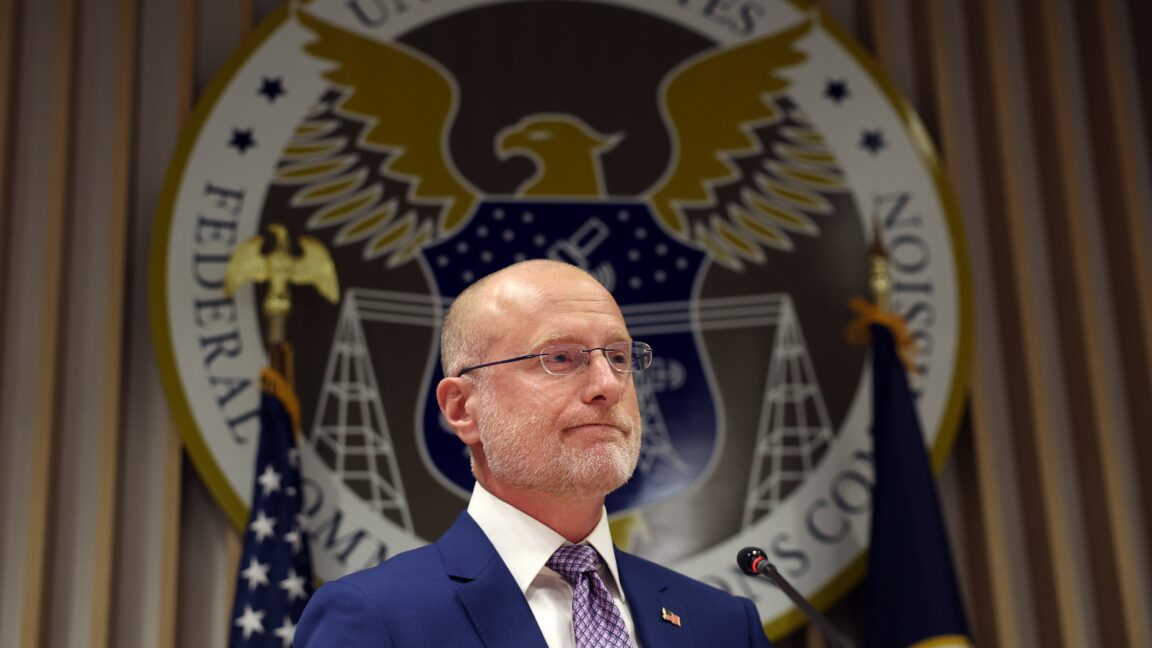
FCC Chairman Brendan Carr has said that replacing a strict ownership limit with a “case-by-case review” of each proposed merger will let the agency approve deals that promote the public interest while rejecting deals that do not. Given Carr's history of threatening to revoke licenses from broadcasters disfavored by President Trump, case-by-case reviews would let Carr influence news coverage of the administration by allowing favored broadcast companies to expand.

Cable lobby petition

The TV ownership rule prohibits any single broadcast station owner from reaching more than 39 percent of all TV households in the US. Congress directed the FCC to set the cap at 39 percent in 2004. On Friday, cable lobby groups submitted a petition asking the FCC to keep the TV ownership cap in place until litigation over the FCC's authority to repeal the rule is over.

The cable groups' filing said the FCC repeal of the TV ownership cap violates the 2004 action by US lawmakers. The decision by Congress to set the cap at a precise numerical threshold was unambiguous, the filing said.

"Congress established the National Cap at 39 percent in the 2004 CAA [Consolidated Appropriations Act] in direct response to the FCC’s attempt to aggressively raise the Cap to 45 percent and made repeated references to the 39 percent Cap in the statute," the petition said.

The petition to the FCC is mainly a procedural step as the commission isn't likely to stay its own order. The cable groups said they intend to sue the commission in a US appeals court once the FCC order is published in the Federal Register. After the lawsuit is filed, they can ask the court to issue a preliminary injunction that would keep the TV ownership cap in place pending the outcome of litigation.

The filing was submitted by cable industry groups that represent providers in Colorado, Florida, Indiana, Michigan, Minnesota, Mississippi, Pennsylvania, Virginia, Washington, and the six New England states. The state and regional groups represent large and small cable companies, including the nation's biggest cable operators Comcast, Charter, and Cox.

FCC says it can change or eliminate rule

The FCC order published last week said that although Congress chose the 39 percent limit, the law set the limit by "directing the Commission to modify its rules rather than by enacting a fixed cap into law." The FCC argues it "has the authority and obligation to reexamine the national cap rule in response to changing circumstances and to modify or repeal it if it no longer serves the public interest."

While the 2004 law states the FCC cannot repeal or modify the cap during its quadrennial reviews of media rules, the FCC argues it can eliminate the cap if it does so outside the quadrennial review process. The law "simply separates the Commission’s decisions to review the national cap from the statutorily mandated review of other media ownership rules that are to occur every four years," the FCC said.

The cable groups' petition said the FCC can't change the cap because the 2004 law "references the 39 percent Cap as statutory, not regulatory." A provision requiring divestiture of stations "specified that someone exceeding 'the 39 percent national audience reach limitation in paragraph (1)(B)' of 'section 202(c)' of '[t]he Telecommunications Act of 1996' 'shall have not more than 2 years to divest,'" the petition said.

"Likewise, Congress singled out the Commission’s only mechanism for setting aside statutory requirements—the Commission’s forbearance authority under 47 U.S.C. § 160—and made clear that it 'shall not apply to any person or entity that exceeds the 39 percent national audience reach limitation,'" the cable lobby petition said. The FCC order argued that the agency's "ability to forbear from enforcement of its rules is distinct from its power to alter or eliminate those rules," and that the FCC forbearance authority doesn't apply to regulation of broadcasters.

FCC may face multiple lawsuits

Cable lobby groups aren't the only ones likely to sue the FCC. After the August FCC vote, media advocacy group Free Press said it plans to join with allies "to appeal this unlawful decision in court."

“Changing this limit requires congressional action, but Carr doesn’t care,” Free Press General Counsel Matt Wood said at the time. “He’ll do whatever it takes to clear the way for Trump-aligned billionaires to swallow up stations wherever and whenever they please. The result would be just one or two dominant broadcasters in every market, deep job cuts for journalists, and an influx of bargain-basement content disguised as local news.”

Even before repealing the TV ownership cap, the Carr FCC waived the rule when it approved the Nexstar Media Group purchase of Tegna. The Nexstar/Tegna combination would reach 80 percent of TV households in the US, or 54.5 percent when applying what’s known as the “UHF discount" in which only half of the households reached by a UHF station are counted toward the limit.

A federal judge ordered Nexstar and Tegna to stop integrating their assets and operations while an antitrust lawsuit filed by DirecTV proceeds. The petition from cable groups said the judge "found that the Nexstar/Tegna transaction would result in higher retransmission consent fees, causing harm to consumers, and issued a preliminary injunction that keeps the companies separate to this day." The groups said the harms from the Nexstar/Tegna deal are "merely a preview of the further massive broadcast industry consolidation and higher consumer prices that will follow if this Order [to repeal the national limit] is not stayed."

Disclosure: The Advance/Newhouse Partnership, which owns 14 percent of Charter, is part of Advance Publications, which owns Ars Technica parent Condé Nast.

Read full article

Comments


Read the whole story
Share this story
Delete
Next Page of Stories